Home
Products
Emulsifier List
Application
Gallery
News
Blog
About Us
About Us
Contact Us
Your Position : Home > Blog

What Is Potassium Stearate Used In

Date:2024-04-24
Read:
Share:
Do you know about Potassium Stearate? It's a compound that plays a crucial role across various industries. It serves as an emulsifier and stabilizer widely used in cosmetics, pharmaceuticals, and food sectors. In this blog, we'll explore the multifaceted uses of Potassium Stearate and conduct a comparative analysis with Sodium Stearate.


What is Potassium Stearate Exactly?


Potassium stearate is a compound derived from stearic acid, a saturated fatty acid found in various natural sources such as animal fats and vegetable oils. It is formed by the reaction of stearic acid with potassium hydroxide. Potassium stearate is commonly used as an emulsifier, stabilizer, and thickening agent in a wide range of products. Its properties contribute to the texture, stability, and performance of formulations, making it a valuable ingredient in diverse applications.


Potassium stearate powder for sale

Potassium Stearate Synonyms


Potassium stearate is a compound known by its chemical name, but it also has several synonyms or alternative names, which may vary based on regional or industry-specific conventions. Here are some common synonyms for potassium stearate:
♦Potassium Octadecanoate: This is the systematic chemical name for potassium stearate, derived from its molecular structure.
♦Potassium Salt of Stearic Acid: This term describes potassium stearate about its parent compound, stearic acid, indicating that it is the salt form of stearic acid with potassium.
♦Potassium Stearic Acid: This term combines the names of the constituent elements (potassium and stearic acid) to describe potassium stearate.
♦E470a: In the European Union, food additives are assigned E numbers for regulatory purposes. Potassium stearate is classified as E470a when used as a food additive.
♦Potassium Soap: Since stearic acid is a fatty acid commonly found in natural fats and oils, potassium stearate can be referred to as a potassium soap, especially when used in soap manufacturing or personal care products.
♦Potassium Octadecanoic Acid: This term is another way of denoting the chemical structure of potassium stearate.


Potassium Stearate VS Sodium Stearate


Potassium stearate and sodium stearate are both fatty acid salts. They are a white, odorless powder commonly used in various industries such as cosmetics, pharmaceuticals, and food production. Here's a comparison between the two:
①Chemical Structure:Potassium stearate and sodium stearate belong to a class of compounds known as fatty acid salts or soap salts. They are formed when stearic acid, a long-chain fatty acid, reacts with potassium hydroxide or sodium hydroxide, respectively. Potassium stearate has the chemical formula C18H35KO2. Sodium stearate has the chemical formula C18H35NaO2.

②Solubility:The difference in solubility between potassium stearate and sodium stearate is due to the varying properties of potassium and sodium ions. Sodium ions have a smaller hydrated radius compared to potassium ions. Therefore, Sodium stearate is more soluble in water compared to potassium stearate. This makes sodium stearate a better emulsifier in water-based formulations. Potassium stearate is less soluble in water but more soluble in polar solvents compared to sodium stearate.This difference in solubility affects the emulsifying and dispersing properties of these compounds in water-based systems.

③Compatibility:The pH sensitivity of potassium stearate can limit its compatibility with acidic ingredients or formulations with low pH levels. In such cases, potassium stearate may undergo hydrolysis or other chemical reactions, affecting the stability and efficacy of the product.Sodium stearate is more tolerant of acidic conditions, making it suitable for a broader range of formulations, including those containing acidic active ingredients or additives.

④Physical Properties:The differences in physical properties between potassium stearate and sodium stearate stem from their chemical structures and interactions with other ingredients in a formulation.
Potassium stearate powder tends to produce creams and lotions with a lighter texture and better spreadability. It is suitable for products like facial moisturizers and creams. Sodium stearate contributes to the hardness and durability of solid soap bars, making them suitable for cleansing and personal hygiene.

⑤Applications:In addition to their roles as emulsifiers and thickeners, both potassium stearate and sodium stearate are used as gelling agents in certain formulations.Sodium stearate is commonly employed in the manufacturing of solid soaps and detergents due to its ability to produce a stable lather.Potassium stearate is preferred in certain cosmetic and pharmaceutical formulations due to its softer texture and smoother feel on the skin.

Both potassium stearate and sodium stearate have their unique applications and benefits, and the choice between them depends on the specific needs of each industry. They are safe and effective ingredients that have been used for many years without any negative side effects.

Potassium stearate in baking

What Are Potassium Stearate Uses?


Potassium Stearate in Food

Potassium stearate, while primarily known for its applications in cosmetics, pharmaceuticals, and industrial sectors, is also used in the food industry, albeit less commonly than its sodium counterpart. Here are some potential uses of potassium stearate in food:
➊Emulsifier: Potassium stearate can act as an emulsifier in food products, helping to blend ingredients that would normally separate, such as oil and water. It can improve the texture and consistency of foods like sauces, dressings, and spreads.
➋Stabilizer: In certain food formulations, potassium stearate for sale can serve as a stabilizer, helping to maintain the uniformity of the product and prevent ingredients from settling or separating over time. It may be used in products like beverages, dairy alternatives, and confectionery.
➌Anti-caking Agent: Potassium stearate can function as an anti-caking agent, helping to prevent clumping or sticking of powdered or granulated ingredients. It is sometimes used in dry mixes, seasoning blends, and powdered supplements to ensure flowability and ease of handling.
➍Release Agent: Potassium stearate powder can be employed as a release agent in food processing equipment or molds to prevent food from sticking during manufacturing or packaging. This can be particularly useful in the production of baked goods, confectionery, and extruded snacks.


Potassium stearate in cake gel


Potassium Stearate In Cosmetics & Pharmaceutical

In the cosmetic industry, potassium stearate is commonly used as an emulsifier, thickener, and stabilizer in various products such as lotions, creams, and makeup. It helps to keep the ingredients together and improve their texture, making the products smoother and easier to apply. It is also an effective cleansing agent that helps to remove dirt and excess oils from the skin.

The pharmaceutical industry also uses potassium stearate in various formulations such as tablets and capsules. It acts as a lubricant and helps to prevent the ingredients from sticking to the machinery during the manufacturing process. It also improves the flowability of the powdered ingredients, allowing for faster and more accurate dosing.


The Bottom Line


Overall, potassium stearate is a highly versatile substance that plays an important role in many different industries. It helps to improve the performance of various products and enhances their overall quality, making them more appealing and efficient.To get personalized pricing and free samples of Potassium Stearate, contact CHEMSINO, a food emulsifier supplier and manufacturer in China.
Related Blog
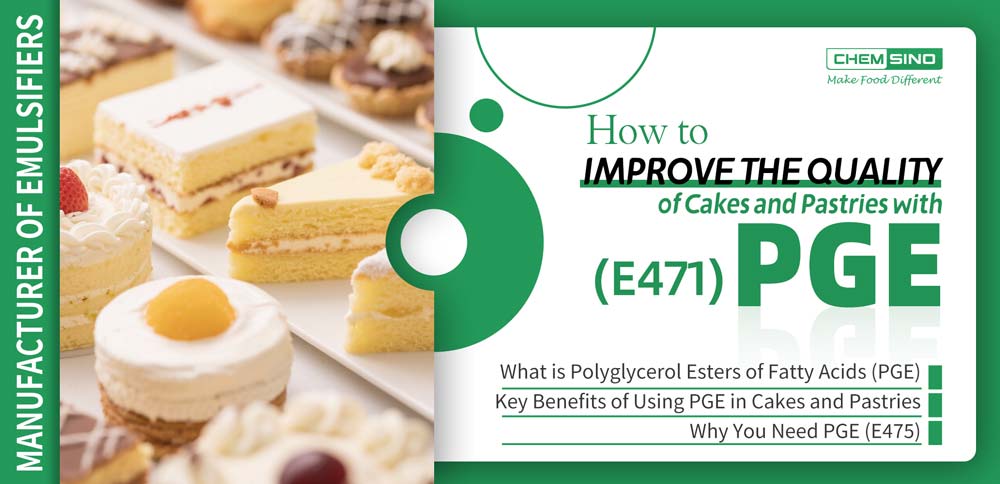
How to Improve the Quality of Cakes and Pastries with PGE E475
12 May 2025
Producing consistent, high-quality cakes and pastries is essential for success in the baking industry. One key ingredient that enhances texture, volume, and shelf life is Polyglycerol Esters of Fatty Acids (PGE or E475). This versatile emulsifier improves dough stability, aeration, and moisture retention, ensuring soft, fluffy cakes and perfectly structured pastries every time. Ideal for bakeries, pastry manufacturers, and ingredient suppliers, polyglycerol esters of fatty acids halal helps optimize baking processes while maintaining superior product quality.
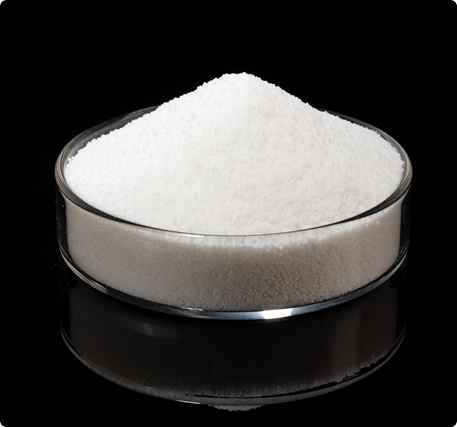
Polyglycerol Esters of Fatty Acids PGE
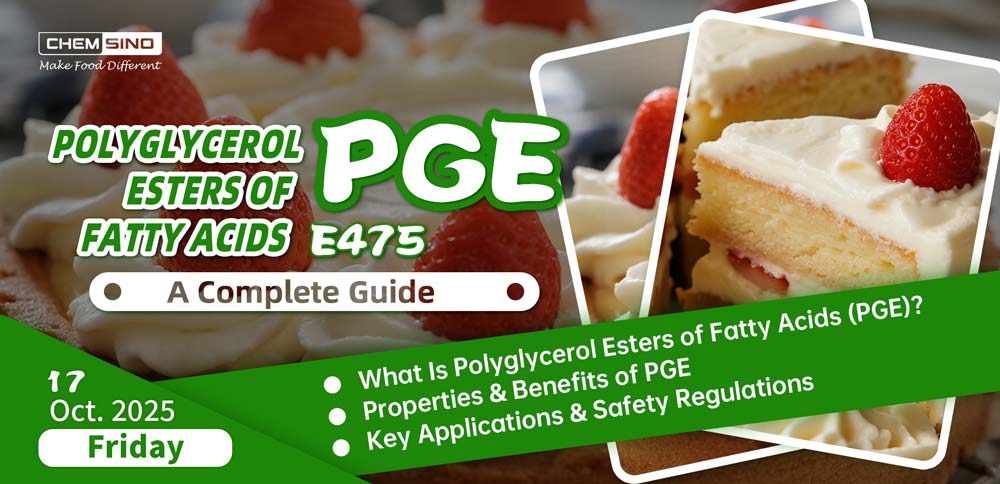
Polyglycerol Esters of Fatty Acids (PGE) - A Complete Overview
17 Oct 2025
Polyglycerol Esters of Fatty Acids (PGE, E475) are versatile non-ionic emulsifiers made from polyglycerol and vegetable-based fatty acids. They effectively combine oil and water, improving texture, stability, and appearance in various foods. PGE is widely used in bakery, dairy, margarine, and confectionery applications to ensure smooth consistency, longer shelf life, and high product quality. As a trusted emulsifier supplier, CHEMSINO provides high-purity PGE products and customized solutions to meet diverse manufacturing needs.
Sorbitan Monostearate (SMS) in Food and Yeast
What Is Sorbitan Monostearate (SMS) in Food and Yeast?
14 Nov 2025
Sorbitan Monostearate (SMS, E491) is a versatile non-ionic emulsifier widely used in bakery, dairy, confectionery, ice cream, margarine, and commercial yeast production. Made from sorbitol and stearic acid, SMS enhances texture, stability, and processing efficiency, making it a reliable ingredient for improving food quality.
Start earning substantial
profits in your country today!
Email
Whatsapp